
AI News
  • Home
  • Climate Tech
  • Carbon 101
  • Application
  • Carbon Projects
  • Climate Policy
No Result
View All Result
SAVED POSTS
AI News
  • Home
  • Climate Tech
  • Carbon 101
  • Application
  • Carbon Projects
  • Climate Policy
No Result
View All Result
AI News
No Result
View All Result
What Is REDD+? Avoided Deforestation Credits Explained

What Is REDD+? Avoided Deforestation Credits Explained

joecherian93@gmail.com by joecherian93@gmail.com
August 11, 2026
in Carbon 101, Carbon Projects
0
585
SHARES
3.2k
VIEWS
Summarize with ChatGPTShare to Facebook

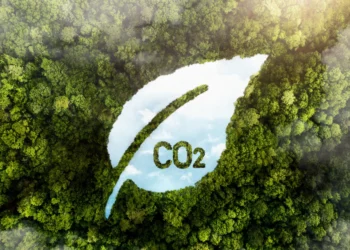
REDD+ stands for Reducing Emissions from Deforestation and forest Degradation — the “+” adds conservation, sustainable management, and enhancement of forest carbon stocks. It’s the mechanism that turns not cutting down a forest into a carbon credit, and it’s simultaneously one of the most important and most contested ideas in climate finance.

The logic

Deforestation causes roughly a tenth of global emissions. Standing tropical forest stores enormous carbon, but to the people living around it, cleared land often pays better. REDD+ flips that equation: project developers work with communities and governments to stop expected deforestation, and the avoided emissions — the difference between the deforestation baseline and what actually happens — are issued as credits. Credit revenue funds rangers, alternative livelihoods, land titling, and community payments, making the forest worth more alive than cleared.

How the tonnes are counted

Everything hinges on the baseline: how much forest would have been lost without the project. Methodologies use historical deforestation rates, regional reference areas, and satellite monitoring. Verified reductions, minus deductions for leakage (logging displaced elsewhere) and a buffer pool contribution (insurance against future fires), become sellable credits.

Why REDD+ became controversial

From 2022, journalists and academics showed that some flagship projects had used inflated baselines — claiming to prevent deforestation that was never likely — meaning many issued credits didn’t represent real tonnes. Prices for REDD+ credits collapsed toward $3–6, and “avoided deforestation” became shorthand for the market’s integrity problem.

The criticism was partly fair and partly overcorrection: rigorous projects with genuine threat, strong community benefits, and conservative accounting exist, and the underlying problem — forests are worth more dead than alive — hasn’t gone anywhere.

The 2026 reforms

Verra has overhauled its REDD+ methodologies: baselines are now allocated top-down from jurisdictional data rather than chosen by developers, monitoring leans on satellites, and older projects must transition. Jurisdictional REDD+ — crediting whole states or countries for reducing deforestation, with programs like ART-TREES — is scaling as the successor model, and features in Article 6 country deals. Ratings agencies now score individual REDD+ projects, letting buyers separate the rigorous from the wishful.

Should buyers touch REDD+?

Rated, post-reform REDD+ plays a legitimate role in a portfolio: it’s among the cheapest ways to fund urgent conservation with real biodiversity and community co-benefits. But treat it as high-impact avoidance, not permanent removal — and buy only projects with current methodologies and independent ratings.

Related reading: Reforestation Carbon Credits · Carbon Credit Additionality Explained
Tags: AnthropicBusiness AIClaude AI
SummarizeShare234
joecherian93@gmail.com

joecherian93@gmail.com

Related Stories

Carbon Credits vs Carbon Offsets: The Real Difference

Carbon Credits vs Carbon Offsets: The Real Difference

by joecherian93@gmail.com
July 9, 2026
0

If you've spent any time reading about climate action, you've seen "carbon credits" and "carbon offsets" used as if they were the same thing. They're closely related —...

How Do Carbon Credits Work? The 5-Step Lifecycle

How Do Carbon Credits Work? The 5-Step Lifecycle

by joecherian93@gmail.com
August 11, 2026
0

Everyone has heard that companies "buy carbon credits," but how do carbon credits work behind the scenes? Every credible credit follows the same five-step lifecycle — and understanding...

Compliance Carbon Markets Explained: ETS & Cap-and-Trade

Compliance Carbon Markets Explained: ETS & Cap-and-Trade

by joecherian93@gmail.com
August 11, 2026
0

A compliance carbon market is created by law. Governments set a limit on how much regulated industries may emit, then let companies trade the right to emit within...

25 Carbon Market Terms Everyone Should Know

25 Carbon Market Terms Everyone Should Know

by joecherian93@gmail.com
August 11, 2026
0

Carbon markets run on jargon. This glossary decodes the 25 carbon market terms you'll meet most often — in plain English, one or two sentences each. The fundamentals...

Next Post
Carbon Credits for Small Business: A Practical Guide

Carbon Credits for Small Business: A Practical Guide

Leave a Reply Cancel reply

Your email address will not be published. Required fields are marked *

carboncred.org

We bring you the best Premium WordPress Themes that perfect for news, magazine, personal blog, etc. Check our landing page for details.

Recent Posts

  • Hello world!
  • What Are Carbon Credits? A Beginner’s Guide for 2026
  • Carbon Credits vs Carbon Offsets: The Real Difference

Categories

  • Application
  • Carbon 101
  • Carbon Finance
  • Carbon Projects
  • Climate Policy
  • Climate Tech
  • Uncategorized

Weekly Newsletter

  • Buy JNews
  • Support Forum
  • Pre-sale Question
  • Contact Us

© 2026 JNews - Premium WordPress news & magazine theme by Jegtheme.

Welcome Back!

Login to your account below

Forgotten Password?

Retrieve your password

Please enter your username or email address to reset your password.

Log In
No Result
View All Result
  • Landing Page
  • Buy JNews
  • Support Forum
  • Pre-sale Question
  • Contact Us

© 2026 JNews - Premium WordPress news & magazine theme by Jegtheme.